
Goethe's Colour Theory: The Psychology of Colour
Introduction Johann Wolfgang von Goethe, one of the greatest thinkers of the late 18th and early 19th century, developed a groundbreaking colour theory distinguished by its focus on the subjective experience of colour. Whereas Isaac Newton's approach to colour concentrated on the physical aspects of light and its refraction through a prism, Goethe's approach was more phenomenological and psychological. His work, summarised in the book "Zur Farbenlehre" (1810), has had a lasting impact on how we understand colour, not only as a physical phenomenon, but as something deeply interwoven with human emotion and perception.
Introduction
Johann Wolfgang von Goethe, one of the greatest thinkers of the late 18th and early 19th century, developed a groundbreaking colour theory distinguished by its focus on the subjective experience of colour. Whereas Isaac Newton's approach to colour concentrated on the physical aspects of light and its refraction through a prism, Goethe's approach was more phenomenological and psychological. His work, summarised in the book "Zur Farbenlehre" (1810), has had a lasting impact on how we understand colour, not only as a physical phenomenon, but as something deeply interwoven with human emotion and perception.
Goethe's Rejection of Newton
Goethe's colour theory arose partly as a reaction to the theories of Isaac Newton. Newton had defined colour as the result of the refraction of white light through a prism, whereby different wavelengths of light manifested themselves as different colours. Although this was physically correct, Goethe found this approach too reductionist and mechanistic. He believed that Newton's theory could not fully explain the richness of human colour experience. Goethe was particularly interested in how people experience colours and what those experiences revealed about their inner lives.
Goethe argued that colour arises from the interaction between light and darkness, mediated by human perception. He viewed colour as a dynamic process that cannot be fully explained by the physical sciences alone. This led him to develop his own colour wheel, based on the six colours he considered fundamental: red, orange, yellow, green, blue and violet.
Goethe's Colour Wheel
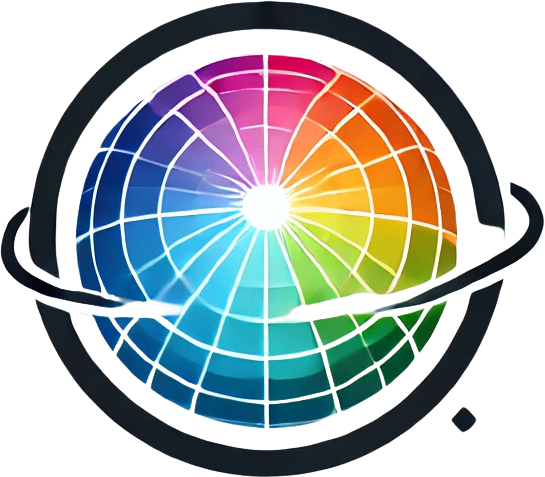
Goethe's colour wheel differs significantly from Newton's. Whereas Newton created a linear scale of colours based on wavelengths, Goethe organised colours based on their psychological effects and how they complement and contrast with one another. Goethe's colour wheel places complementary colours opposite each other (for example, red opposite green) and emphasises the balance and harmony that arises from their interaction.
This colour wheel was intended not only to describe the physical properties of colour, but also to better understand the feelings and emotions that colours can evoke. Goethe, for example, saw red as a warm and stimulating colour, while blue was regarded as calming and introspective. He emphasised that colours are not merely physical phenomena, but also have psychological and emotional dimensions.
The full article is available to members
You are reading the opening section. Members read the full article.
The full article is available to members
This entry continues with the measurement protocol, worked examples and the source list. Members read it in full.